THE FOUR HOUSES · CANON
Three callings, one service
Excellence is plural.
A House is a direction of growth a Resident chooses: a developmental orientation and a symbolic identity. It is not a caste, a rank, or a locked group. This page describes how the Houses are meant to work. There is no live product yet.

Nexusland Conceptual Art · CONCEPT
THE INDEX · CANON
Mind, body, beauty, service
Four Houses, equal in dignity.

CANON
House of Mentis
Mind. Intellect, systems, inquiry, technical craft.

CANON
House of Fortitudo
Body. Body, endurance, recovery, self-mastery.

CANON
House of Cultura
Beauty. Art, story, memory, aesthetic civilization.

CANON
House of Aequalitas
Service. Stewardship, governance, operations, balance.
Nexusland Conceptual Art · CONCEPT
WHAT A HOUSE IS · CANON
Equal in dignity, not symmetry
It is more honest to say so than to pretend there are four identical doors.
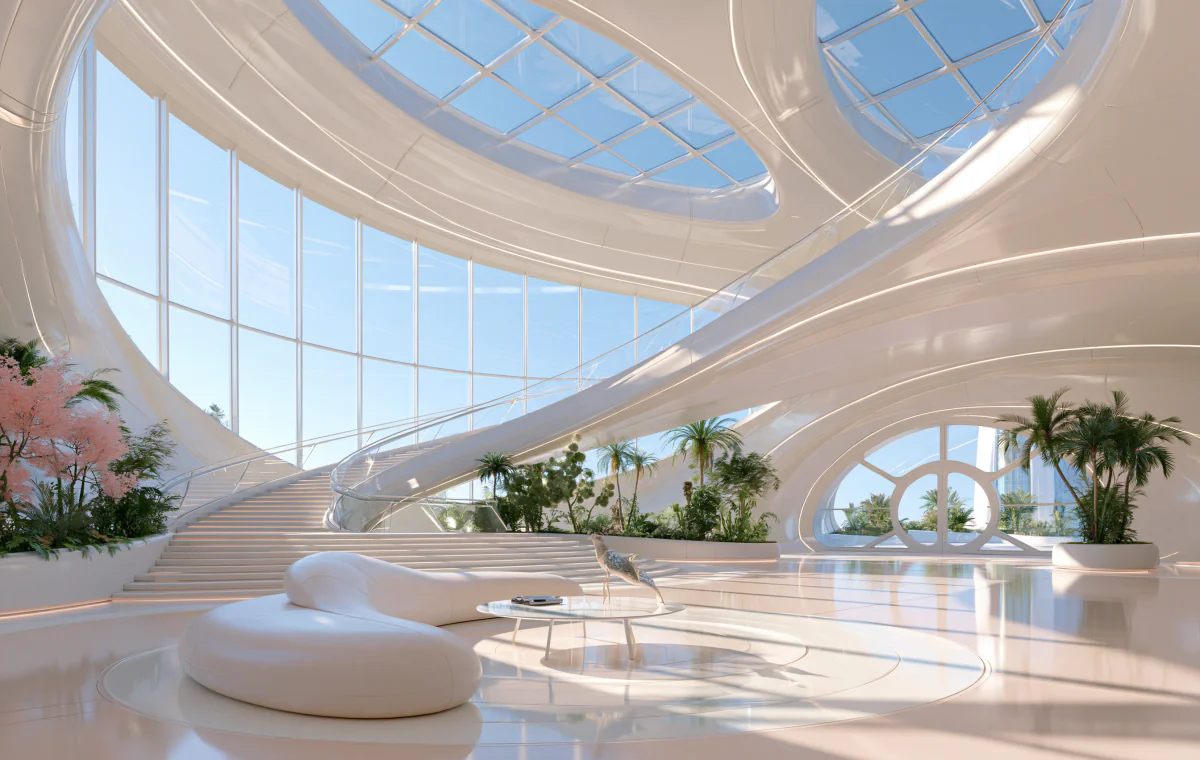
Mentis, Fortitudo, and Cultura are Houses of calling: domains of human life, which a person chooses as a direction of growth. Aequalitas is the House of service: not a domain but a function, entered through a gate. A Resident may change Houses, but not constantly: about once a year, because identity needs enough stability to shape habit and competence.
- Three Houses of callingMind, body, beauty. They create the living substance of the world.
- One House of serviceStewardship, canon, law, safety, treasury, fairness.
Nexusland Conceptual Art · CONCEPT
ONE HOUSE, TEN CHAPTERS · HORIZON
One mission, ten chapters
One mission and one summit, with local particularities so that diversity is sustained.
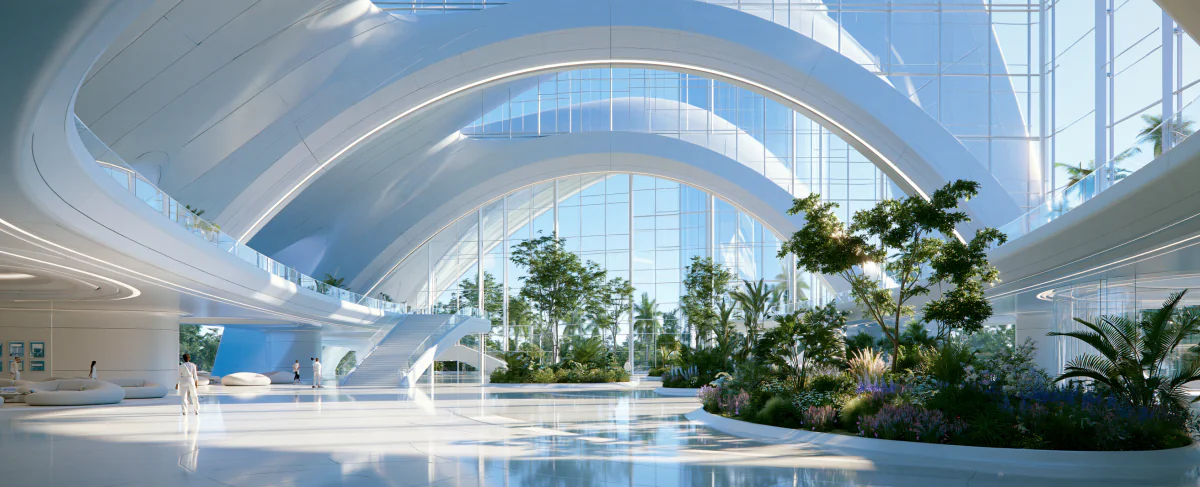
A House is single across the whole world: one mission, one roadmap, one leadership, one vote. In each of the ten cities it is meant to keep a chapter: a local presence with its own events, gatherings, local quests, and character. This is deliberately unlike the communities, which live by the principle of locality. Houses build the shared thing, and the shared thing is one.
Nexusland Conceptual Art · CONCEPT
WHAT A HOUSE BUILDS · CANON
Substance, not surfaces
We build only what would be worse without us.
Here runs the line that decides whether the world turns into a duplicate of itself. The test for every decision is not «can we build this» but «would the world be worse if someone else built it».
Yes
- Houses own the substanceEvery House may create in all eight product classes: products of the social world, software, hardware, content and media, education, events and community, commerce and service, research and experiment.
- Domain, spirit, and standardMentis makes research and technical things, Fortitudo bodily and rhythmic ones, Cultura cultural things and things of memory.
- The core is built by usThe world and its canon, Luminous Futurism as a design language, the finite portion with a bottom, the city as navigation, the constitution of governance.
- Context is taken ready-madeEverything necessary but non-differentiating is taken ready-made, without shame.
No
- A House does not own shared surfacesThe feed, the profile, the design system, the map, and the like are too infrastructural to belong to one House.
- A House does not plan communitiesCommunities have no roadmaps. A community is threads, conversation, making, and life.
- No building «because we can»If the standard solution is fine, take the standard one.
- No towers to earnHouses do not compete with communities: a House’s building is measured by the Residents who have joined.
THREE SCALES OF PLANNING · CANON
A direction is not a promise
The direction is declared, only the next rung is promised.
The commonest mistake of ambitious projects is confusing a direction with a promise. Gates, not dates: the next step opens when the previous one has carried weight, not when a year arrives.

Nexusland Conceptual Art · CONCEPT
- The horizonThe direction of the world, over decades. The horizon promises nothing. It exists so that every decision today knows which way it faces.
- The eraWhat becomes possible at the present capability. Here direction turns into concrete lines of work.
- The seasonThe season plan is derived from the era. This is the only level that promises anything.
SEVENTY TO THIRTY · CANON
The necessary stays necessary
No vote is capable of harming the world.
A House’s seasonal capacity is divided for good. 70 percent is the mandatory backbone: the infrastructure without which the world does not work; it is not voted on at all. 30 percent belongs to people’s initiatives, and that is where proposals, assessment, and the priority vote live. One may only vote on what was never mandatory.

Nexusland Conceptual Art · CONCEPT
THE DEVELOPMENT TREE · HORIZON
Fog is honesty
Built nodes glow, current ones carry a crane, future ones stand in fog.
A House is meant to show its work as a tree, with two kinds of branch: backbone branches, marked as mandatory, and initiative branches grown out of Residents’ petitions. The fog ahead is not decoration: beyond the next season nobody knows the details, and showing them would be promising. A node leaves the fog when it enters the season plan.
Nexusland Conceptual Art · CONCEPT
THE PETITION · CANON
An idea’s road
Five steps, and each exists against a specific failure.
An idea that fails to gather signatures within a season quietly lapses and may be raised again. Similar petitions within one season merge into one.
Nexusland Conceptual Art · CONCEPT
- The proposalAny member of a House submits an idea: no thresholds, no permission, in public.
- SignaturesIt is signatures, not anyone’s favor, that buy an idea the right to an official answer. The threshold is proportional, not absolute.
- Professional assessmentA duty, not a favor: once the threshold is crossed, practitioners of the relevant track must answer within a set deadline.
- The priority voteAll members of the House, one person one vote, only among what has been assessed. This decides the queue, not the fate.
- The season planThe Council composes the plan from the backbone and the top of the priority list, and publishes what was included and what was deferred, with reasons.
TWO POWERS · CANON
Assessment and priority
«Can this be done» and «do we need this» are different questions.
Nexusland separates not weights but powers, because the two questions belong to different people.
What do practitioners assess?
Facts, not tastes. Three questions: can this be built within a season with our means; does it violate the Ideals or the Red Lines; what is the rough size of the work. Their power is a veto on the impossible and the forbidden, never on the distasteful.
Can a veto be checked?
A veto requires a written reason, and the reason is published. If someone builds the «impossible» over a weekend, the veto burns in public.
Do experts weigh more on moral questions?
No. Moral questions carry no weights. Where dignity, justice, and the limits of the permissible are at stake, every voice is equal. Professional weight exists only for narrow subject-matter assessments, and even there the ceiling is low.
What if a veto was self-serving?
The Arbitration Council reviews it: a human decision. Decisions belonging to human judgment are surrendered neither to a metric nor to an automaton.
How is the vote shown?
Blind ballot, live broadcast. Until you have voted, you see nothing. The moment you vote, the live broadcast begins. Whoever waits until the end sees only the announced result.
THE COMPASS · HORIZON
A pull, not a door
Not every decision has the shape of yes or no.
Once a season a House is meant to take up the compass: a plane with two axes on which everyone places their point. What is shown is not only the average but the cloud of all points, because the middle between two camps is often a place where nobody stands. The compass commands nothing: the season plan must either follow that direction or publicly explain why it does not.
- Inside or newcomersImprove life for those already inside, or bring in new people.
- Outward or deeperBuild for the world outside, or deepen our own environment.
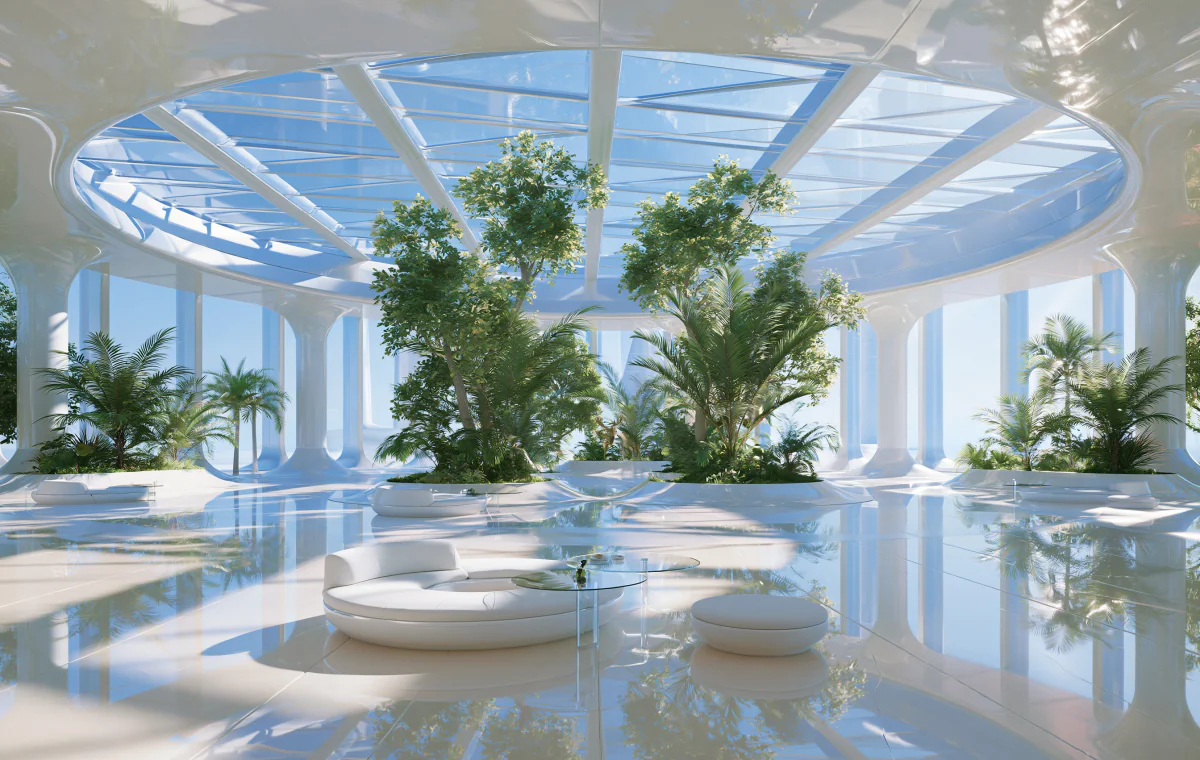
Nexusland Conceptual Art · CONCEPT
THE MAGISTER AND THE COUNCIL · CANON
A master, not a chief
A Magister does not own the House.
A House is led by the House Council; its members are called Magisters, from the Latin for master and teacher. A House belongs to those who serve in it; the Magister only keeps order and answers for the season plan being delivered and explained. None of these bodies exists yet. No Council, Guard, Treasury, or election has been held or formed. Today the project is run by one person.
- Secret elections, in cohorts
As in the communities: a secret ballot lowers the price of the courage to stand and of the honesty to vote against.
- A threshold for candidates, not voters
To stand, one must be a practitioner with a confirmed track of service. All members of the House vote.
- Terms, not thrones
A mandate has a term and re-election; there are no lifetime mandates anywhere in this world.
- The transparent trail
Council decisions, season plans, and vetoes with reasons go into a public journal.
- Recusal
A Magister does not assess their own petition and does not judge a matter in which they have an interest.
TRACKS OF SERVICE · CANON
A direction and the work
A House is a direction; a track is what a person actually does in it.
Tracks do not multiply levels: a person has one rank and one level. A track accumulates badges and titles of mastery. Changing House takes away neither rank nor the badges already earned: memory in Nexusland is never remeasured. Nothing on this page is an offer of work, pay, or a share of income. No tasks are open today. Before the first one is, the terms will be published in plain words.
Writing
Code
Moderation
Mentorship
Translation
Research
Organizing events
THE LIFE OF A HOUSE · CANON
Rules that keep it honest
Three rules keep governance from strangling the world or seizing up.
Why are councils not opened at once?
A mechanism of participation that cannot reach a quorum discredits the very idea of participation. So every mechanism has an activation point by the number of active members, and below it a simple manual form applies: an appointed Magister, an open list of ideas, moderation by hand. Governance bodies are not launched as empty pageantry.
What stops procedure from becoming a swamp?
A procedure has a deadline, and silence means yes. No professional assessment delivered on time: the idea proceeds without it. The Council fails to convene: the decision passes to the Magister, with a mandatory public reason. No season plan announced: the previous one stands.
What sanctions exist?
An honest scale: warning, restriction of action, exclusion. Every step carries a written reason and a right of appeal. A ban does not take away what was made; it takes away continuation. And the door stays open: there is a path of return.
There is one boundary. Where criminal or administrative liability begins, Nexusland does not judge: investigation and punishment belong to the lawful authorities.
Is absence punished?
No. Rest is not an offense. A person’s rank, badges, and bricks are never remeasured. Away for a season, back the same. A world that punishes absence buys presence without desire.
What does a House put first?
The order is a statement about what matters: first what is being built now, then what a person can take up, then what members have made, then votes and petitions. Governance and the chronicle sit at the bottom: people come there rarely, but it must always be visible.
How would a House show on an object?
By colour and material, not by a printed slogan. The question asked of every object from the world: would it still feel credible in ten years?
NEXT
The Resident
A House is not a department and not an interest guild.
It is the way many people build one thing without losing their voice, their name, or their right to leave.
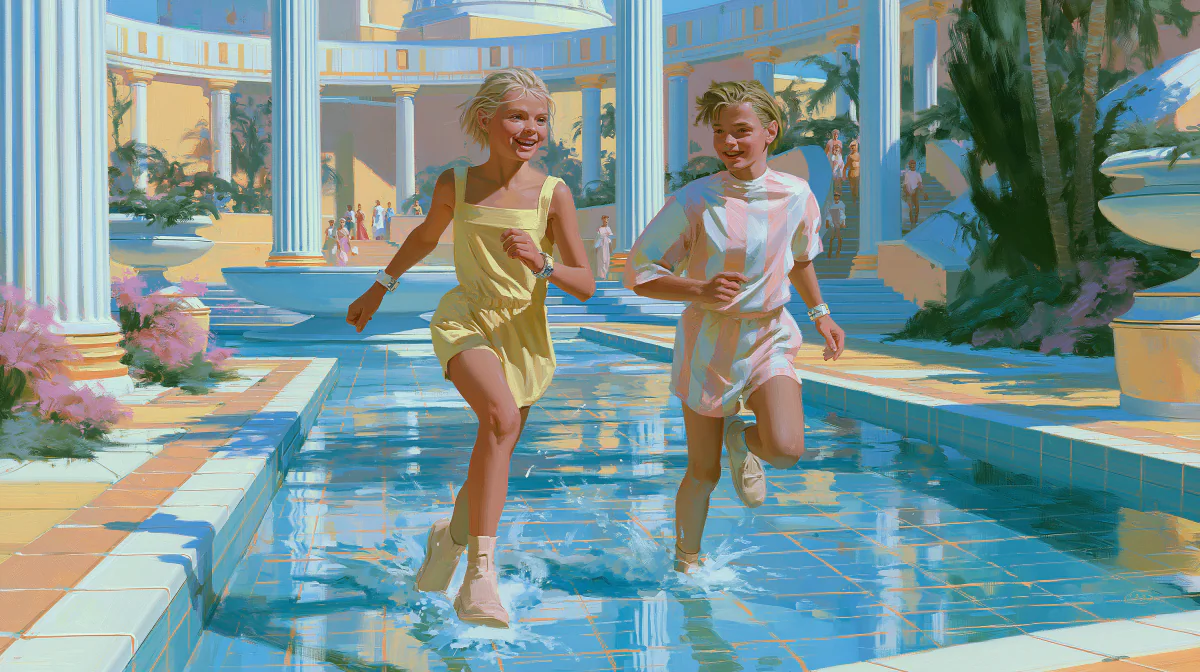
Nexusland Conceptual Art · CONCEPT